









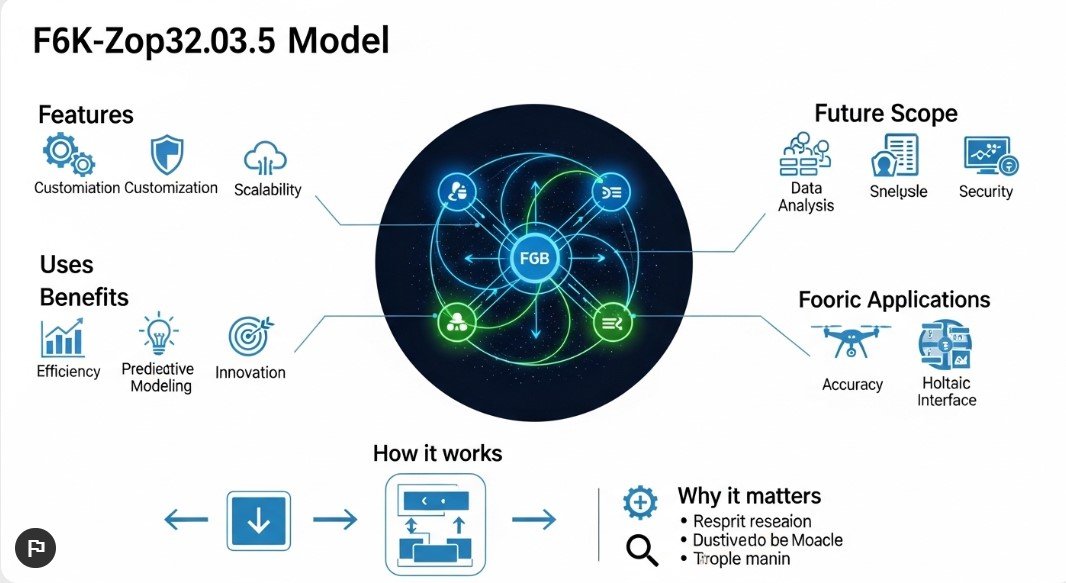
The digital world is constantly changing and evolving, and new models, systems, and technologies are constantly being created at an unprecedented rate. One of the latest buzzwords in recent times is the f6k-zop3.2.03.5 model. Although it may seem complex and technical at first glance, gaining insight and knowledge about its basic concept and functionality can prove to be highly beneficial and helpful for tech enthusiasts and businessmen alike.
In this comprehensive guide, we will look at everything you need to know about the f6k-zop3.2.03.5 model, and by reading this article, you will become familiar with its basic concept, benefits, functionality, and applications, among other things, whether you are a newbie or just want to gain more insight and knowledge about the subject.
What is the f6k-zop3.2.03.5 Model?
The f6k-zop3.2.03.5 model is a structured system or framework that is typically associated with advanced computational processes, data handling, or algorithmic operations. Although the naming convention may vary depending on its use case, it generally represents a versioned model designed for performance optimization and scalability.
At its core, this model integrates multiple components such as:
-
Data processing layers
-
Analytical algorithms
-
Performance optimization modules
-
Output generation mechanisms
The combination of these components allows the model to perform complex tasks efficiently while maintaining accuracy and reliability.
Understanding the Structure of f6k-zop3.2.03.5 Model
To fully grasp how this model works, it is important to break down its structure into smaller parts.
1. Core Engine
The core engine acts as the backbone of the system. It processes input data and ensures that all operations are executed smoothly.
2. Data Input Layer
This layer is responsible for collecting and validating incoming data. It ensures that only accurate and relevant data is passed to the next stage.
3. Processing Unit
The processing unit applies algorithms and computational logic to transform raw data into meaningful results.
4. Output Interface
The final stage where processed data is presented in a usable format, such as reports, dashboards, or automated responses.
Key Features of f6k-zop3.2.03.5 Model
The popularity of this model is largely due to its powerful features. Some of the most notable ones include:
High Efficiency
The model is designed to handle large volumes of data without compromising speed or accuracy.
Scalability
It can easily adapt to increasing workloads, making it suitable for both small and large-scale applications.
Flexibility
The model can be customized according to specific requirements, allowing developers to modify its behavior.
Reliability
With built-in error-handling mechanisms, the system ensures consistent performance even under challenging conditions.
Automation Capabilities
It supports automation, reducing the need for manual intervention and increasing productivity.
How Does the f6k-zop3.2.03.5 Model Work?
Understanding the working mechanism is essential to appreciate its true potential.
Step 1: Data Collection
The process begins with gathering data from various sources such as databases, APIs, or user inputs.
Step 2: Data Validation
Before processing, the data is validated to eliminate errors and inconsistencies.
Step 3: Processing and Analysis
The validated data is then processed using advanced algorithms to generate insights or outputs.
Step 4: Output Generation
Finally, the results are delivered in a structured and understandable format.
Applications of f6k-zop3.2.03.5 Model
The versatility of this model allows it to be used in multiple industries and domains.
1. Software Development
Developers use it to build scalable applications with efficient data handling capabilities.
2. Data Analytics
It plays a significant role in analyzing large datasets and generating actionable insights.
3. Artificial Intelligence
The model can be integrated into AI systems to improve decision-making processes.
4. Business Automation
Organizations use it to automate workflows and improve operational efficiency.
5. Cybersecurity
It can help detect anomalies and potential threats in real-time systems.
Advantages of Using f6k-zop3.2.03.5 Model
There are several benefits associated with implementing this model.
Improved Performance
The optimized architecture ensures faster execution of tasks.
Cost Efficiency
Automation reduces operational costs and minimizes resource usage.
Better Decision Making
Accurate data analysis leads to more informed decisions.
Enhanced Productivity
By reducing manual work, it allows teams to focus on more important tasks.
Challenges and Limitations
Despite its advantages, the model is not without challenges.
Complex Implementation
Setting up the system may require technical expertise.
Maintenance Requirements
Regular updates and monitoring are necessary to ensure optimal performance.
Initial Cost
The initial setup cost may be high for small businesses.
Learning Curve
Users may need time to fully understand and utilize the model effectively.
Best Practices for Using f6k-zop3.2.03.5 Model
To get the most out of this model, consider the following practices:
Optimize Data Quality
Ensure that the input data is accurate and relevant.
Regular Updates
Keep the system updated to benefit from the latest improvements.
Performance Monitoring
Continuously monitor the system to identify and resolve issues.
Security Measures
Implement strong security protocols to protect sensitive data.
This comparison highlights why many organizations are shifting towards more advanced models like this one.
Future Scope of f6k-zop3.2.03.5 Model
The future of this model looks promising as technology continues to evolve.
Integration with AI
The model is expected to become more intelligent with AI integration.
Enhanced Automation
Future versions may offer even more advanced automation capabilities.
Wider Adoption
As awareness grows, more industries will adopt this model for various applications.
Continuous Improvement
Ongoing research and development will lead to better performance and new features.
Tips for Beginners
If you are new to this model, here are some tips to get started:
-
Start with basic concepts before diving into advanced features
-
Use online resources and tutorials for guidance
-
Practice with small projects to gain hands-on experience
-
Join communities to learn from experts
Common Mistakes to Avoid
Avoiding common mistakes can save time and effort.
Ignoring Data Quality
Poor data can lead to inaccurate results.
Overcomplicating the Setup
Keep the system simple during the initial stages.
Lack of Monitoring
Failing to monitor performance can result in unnoticed issues.
Why the f6k-zop3.2.03.5 Model is Important Today
In today’s fast-paced digital environment, efficiency and accuracy are more important than ever. The f6k-zop3.2.03.5 model provides a reliable solution for handling complex tasks, making it a valuable tool for businesses and developers.
Its ability to process large amounts of data quickly and accurately gives it a competitive edge in the market.
Conclusion
The f6k-zop3.2.03.5 model is a powerful and versatile system that can meet all the requirements of today’s technology. This advanced feature-rich model has become a necessity in various fields due to its applications.
It might take a little effort to use and comprehend this system, but it’s worth it in the long run. With proper knowledge of the system and updates on recent advancements in the field, it can be used to its maximum potential.
As technology evolves further in the future, the need for a system like f6k-zop3.2.03.5 will increase, making it a worthy investment.